Personal Responsibility: 7 Powerful Ways It Shapes Your Life
Responsibility rarely announces itself. It doesn’t trend. It doesn’t get applause. It doesn’t come with motivational music or dramatic before‑and‑after photos.
It shows up quietly, usually when no one is watching.
It shows up when a bill is late and you deal with it instead of ignoring it. When you snap at someone you love and circle back to repair it. When you follow through even though the excitement is gone.
Most of the stress families live with isn’t caused by massive failures. It’s caused by small things left unattended. Missed follow‑ups. Avoided conversations. Decisions delayed until they quietly compound.
It is the invisible infrastructure that keeps life from collapsing under its own weight. 🧱
Pull‑out thought 💡
Responsibility isn’t about doing more. It’s about leaving less unfinished.
What Responsibility Actually Means (And What It Doesn’t)
Personal responsibility is not about perfection. It’s not about control. It’s not about never needing help.
At its core, responsibility is ownership of inputs, not guaranteed outcomes.
It means:
- Owning your role even when the outcome isn’t ideal
- Following through after motivation fades
- Repairing what breaks instead of pretending it didn’t happen
It does not mean:
- Never failing
- Never resting
- Carrying everyone else’s problems
- Taking responsibility for things outside your control
One of the most damaging mistakes parents make is teaching responsibility as pressure. That doesn’t build strength. It builds anxiety.
When responsibility is framed correctly, it builds confidence, competence, and trust over time. This is why practical life skills matter far more than lectures or punishment. Teaching kids responsibility through everyday tasks, expectations, and follow‑through lays groundwork that lasts far beyond childhood.
You can see this clearly in how practical life skills build long-term responsibility when kids are trusted with real tasks early on.
Why Responsibility Is Missing in Modern Life
Modern life buffers consequences.
Late fees are delayed. Notifications disappear. Someone else is always responsible. There’s always an explanation, an excuse, or a system to blame.
Comfort has quietly replaced competence.
We’ve confused validation with growth and relief with resolution. Blame feels good in the moment. Accountability feels uncomfortable at first, but it restores agency.
When people believe their actions matter, they engage differently with life. When they don’t, they drift.
Research summarized by Psychology Today on accountability shows that ownership is a key driver of sustained behavior change.
Drift is expensive. 💸 It shows up as chronic stress, unstable routines, and constant catch‑up.
Responsibility Has Edges (And That’s Why It Works)
Responsibility only works when it has boundaries.
You are responsible for:
- Your choices
- Your effort
- Your follow‑through
- Your repair
You are not responsible for:
- Other people’s reactions
- Outcomes you don’t control
- Fixing everyone around you
When responsibility has no edges, it turns into burnout. Parents over‑carry. Kids under‑develop. Resentment grows quietly.
Clear responsibility is light enough to carry and strong enough to support growth.
Responsibility Inside the Home

Kids don’t learn responsibility from lectures. They learn it from observation.
They watch how adults handle mistakes. They watch how commitments are treated. They watch whether apologies are real or deflective.
Responsibility in the home looks like:
- Admitting when you forgot
- Repairing after snapping
- Keeping expectations realistic
- Choosing consistency over intensity
Healthy discipline focuses on clarity and follow‑through, not fear. Families that maintain peace with teenagers understand that responsibility grows best in environments built on respect, not control.
This aligns with approaches like discipline without fear or power struggles that emphasize follow-through over force.
Families that focus on maintaining peace and cooperation with teenagers tend to build responsibility through trust rather than control.
How Responsibility Shows Up at Different Ages
Responsibility doesn’t arrive all at once. It develops in layers, shaped by age, environment, and expectations.
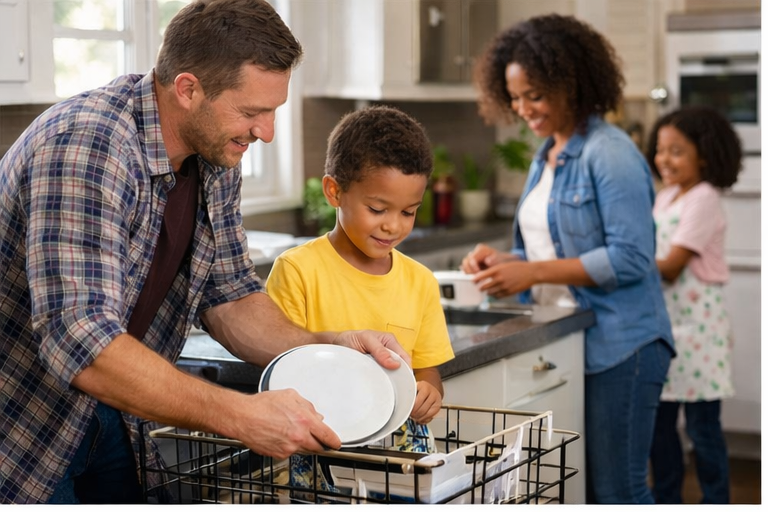
For young kids, personal responsibility looks small and concrete. Putting shoes where they belong. Carrying their own backpack. Helping clean up what they used. These moments aren’t about efficiency. They’re about identity. A child who participates begins to see themselves as capable.
For older kids and teens, personal responsibility shifts toward follow-through and ownership. Remembering commitments. Managing time around schoolwork and activities. Acknowledging mistakes without melting down or deflecting.
This is where many families panic and either clamp down too hard or let go entirely. Neither works.
Responsibility grows best when expectations are clear, support is present, and recovery is normal.
Pull‑out thought 💡
Responsibility isn’t about age. It’s about readiness paired with support.
Accountability vs Blame (Where Most People Get Stuck)
Blame feels relieving. Accountability feels heavy.
Blame says, “This happened to me.”
Accountability says, “This is mine to deal with.”
Blame exports power. Accountability restores it.
The American Psychological Association’s work on resilience highlights accountability as a core factor in recovery and adaptability. People who take ownership recover faster and adapt better over time.
The Skills of a Responsible Life (Not Motivation)
Responsibility isn’t a personality trait. It’s a skill set.
Skills can be practiced. Strengthened. Modeled.
Key responsibility skills include:
- Follow‑through even when motivation fades
- Time realism instead of wishful planning
- Financial awareness instead of avoidance
- Repair instead of denial
- Delayed gratification instead of impulse
Teaching kids about money early, budgeting openly, and modeling healthy financial habits builds responsibility far more effectively than abstract rules.
Tools like the CFPB’s Money as You Grow framework show how financial responsibility develops through gradual, age-appropriate practice.
Even simple habits, such as those outlined in NerdWallet’s budgeting basics, reinforce responsibility through visibility and follow-through.
What Responsibility Looks Like in Small, Boring Moments

This is where responsibility actually lives.
Not in speeches. Not in goals. In ordinary choices.
Responsibility looks like:
- Returning a text you don’t want to answer
- Admitting you dropped the ball
- Fixing a late payment immediately
- Apologizing without explaining it away
- Showing up tired but present
These moments aren’t impressive. They compound quietly.
Pull‑out thought 💡
Trust isn’t built in big promises. It’s built in boring follow‑through.
Teaching Responsibility Without Creating Anxiety
Responsibility taught too early becomes fear. Responsibility taught too late becomes chaos.
Healthy responsibility includes:
- Age‑appropriate expectations
- Natural consequences without humiliation
- Space to fail and recover
- Repair instead of punishment
Families that embrace manageable chaos without losing structure raise kids who can handle responsibility without panic.
This balance is especially clear when families learn to embrace manageable chaos without losing structure.
When Adults Avoid Responsibility (And Kids Notice)
Kids notice everything.
They notice avoidance. Excuses. Inconsistency.
Modeling responsibility means:
- Owning tone after snapping
- Naming mistakes calmly
- Showing recovery instead of perfection
Modeling behavior is one of the most effective ways children learn emotional and behavioral skills.
According to the Child Mind Institute on modeling behavior, children internalize responsibility most effectively through observation, not instruction.
How Responsible People Recover Faster (Not Cleaner)
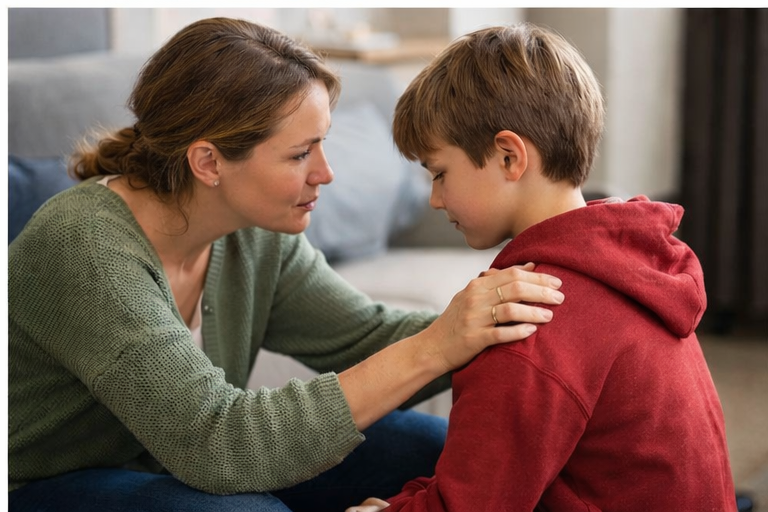
Responsible people don’t fail less. They recover faster.
They don’t spiral. They don’t hide. They don’t wait for motivation.
They:
- Admit the miss
- Fix what they can
- Restart without self‑punishment
Recovery speed matters more than record‑keeping. Responsibility always allows re‑entry. 🚪
Responsibility Is Freedom, Not Restriction
Responsibility reduces emergencies.
It creates margin, predictability, and choice.
It leads to:
- Fewer crisis days
- Less chronic stress
- Stronger self‑trust
- More emotional bandwidth
Encouragement matters, especially in large families carrying heavy loads.
This is where encouragement and perspective for large families can make responsibility feel sustainable rather than overwhelming.
Why Teaching Responsibility Matters More Than Protecting Comfort
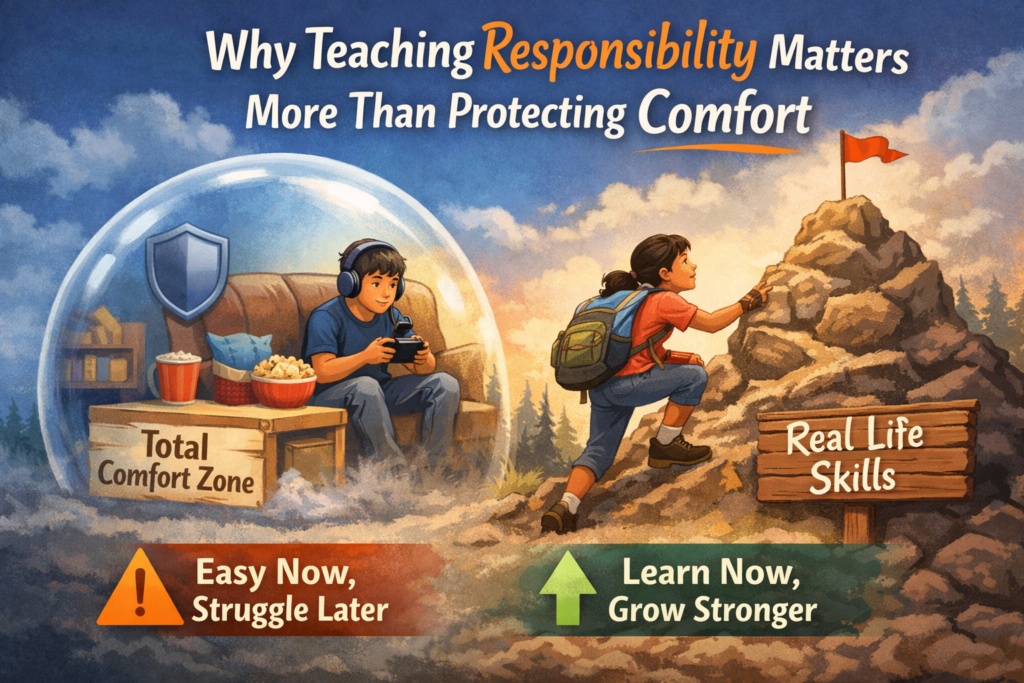
Modern parenting culture often prioritizes comfort. Comfort isn’t wrong, but when comfort becomes the highest goal, responsibility quietly erodes.
When kids are protected from every discomfort, they never learn how to carry weight. When adults are buffered from consequences, they stop trusting themselves to handle difficulty.
Teaching responsibility does not mean withholding compassion. It means pairing compassion with reality.
This is why teaching responsibility intentionally matters. Not through speeches, but through lived experience. Letting kids feel the appropriate weight of their choices while knowing they are still safe and supported.
This approach doesn’t create hardness. It creates confidence.
Personal accountability is responsibility in motion.
It’s the moment you stop explaining and start acting. The moment you shift from “here’s why it happened” to “here’s what I’m doing about it.”
Personal accountability in life shows up when:
- You acknowledge a mistake without qualifiers
- You take corrective action instead of waiting to be reminded
- You follow through even when no one checks
This is the difference between intention and reliability.
People who practice personal accountability build trust faster, repair relationships more easily, and experience less chronic stress. Not because life is easier, but because fewer things are left unresolved.
Accountability in Life Is Built Through Repair
Accountability in life isn’t proven by never messing up. It’s proven by how consistently someone repairs.
Repair looks like:
- Acknowledging harm
- Apologizing without excuses
- Making amends where possible
- Adjusting behavior going forward
Families that normalize repair create emotionally safer environments. Kids learn that mistakes aren’t catastrophic. They’re correctable.
This is one of the strongest gifts responsibility offers.
Teaching Responsibility as a Long Game
Responsibility isn’t mastered in a season. It’s practiced over a lifetime.
Kids don’t need parents who get it right every time. They need adults who model ownership, repair, and persistence.
Adults don’t need to start perfectly. They need permission to restart.
Pull‑out thought 💡
Responsibility always allows a second attempt.
Responsibility Is Built in Ordinary Days
Most people imagine responsibility being tested in dramatic moments. Big failures. Major decisions. Life-altering crossroads.
In reality, responsibility is shaped on ordinary days.
It’s shaped on days when nothing special happens. Days when routines feel dull. Days when motivation is low and nobody is watching.
Those are the days when habits form.
Responsibility grows when you choose to finish what you said you would finish, even when it would be easy to delay. When you tell the truth about where you are instead of where you wish you were. When you close loops instead of leaving them open.
These choices don’t feel heroic. They feel mundane. But over time, they create stability.
Why Responsibility Matters More Than Talent
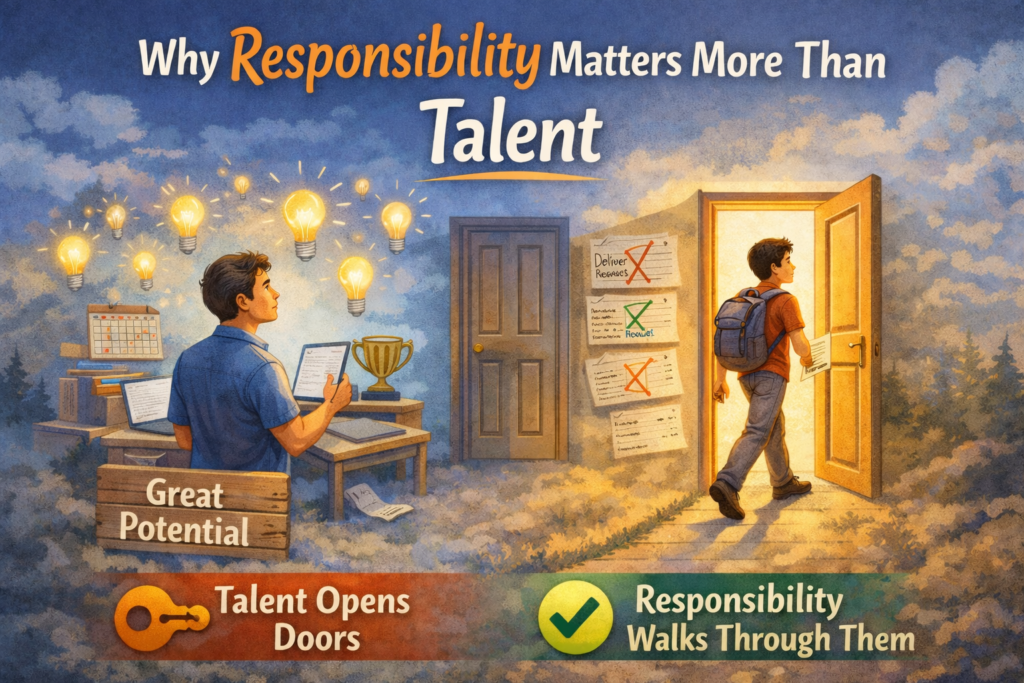
Talent gets attention. Responsibility creates results.
Many people with ability struggle not because they lack intelligence or skill, but because they lack follow-through. Ideas remain ideas. Plans never fully materialize.
Responsibility bridges the gap between potential and reality.
It turns intentions into actions and actions into habits. Over time, those habits become identity.
This is why two people with similar opportunities can end up in very different places. One consistently closes loops. The other consistently postpones.
The difference compounds quietly.
Personal Accountability Without Self-Punishment
Some people confuse accountability with self-criticism.
They believe owning mistakes means replaying them endlessly or speaking harshly to themselves.
That isn’t accountability. That’s emotional punishment.
Personal accountability is calm. It’s forward-facing. It focuses on correction, not condemnation.
You acknowledge what happened, address what you can, and move forward.
This approach builds resilience instead of shame.
Responsibility Is a Skill You Can Restart at Any Point
One of the most damaging beliefs people carry is the idea that responsibility is something you either have or you don’t.
That belief keeps people stuck.
Responsibility isn’t a fixed trait. It’s a skill set. And skills can be rebuilt.
You can restart responsibility after missed years, broken habits, or poor choices. The past doesn’t disqualify you. It simply informs your next step.
Pull‑out thought 💡
Responsibility doesn’t require a clean record. It requires a willingness to re-enter.
Responsibility as Regret Prevention
Most long-term regret isn’t caused by sudden disasters. It’s caused by repeated avoidance.
The message not sent. The habit ignored. The problem delayed until it became unavoidable.
Personal responsibility acts as a form of regret prevention.
It doesn’t guarantee success or happiness. But it dramatically reduces the number of preventable problems that follow you into the future.
That alone makes it worth practicing.
Final Thought
Responsibility doesn’t announce itself.
It works quietly, day after day, holding life together in ways most people never notice.
In families, it creates stability. In individuals, it builds trust. In life, it prevents unnecessary damage.
And while it may never feel exciting, it remains one of the most reliable tools available for building a life that doesn’t constantly feel on the brink.
