Staying Focused: 12 Proven Tricks That Transform Your Day

Do you find yourself easily distracted and struggling to maintain concentration throughout your day? As a parent managing a large household, I’ve learned that focus amid chaos isn’t just helpful—it’s an essential survival skill. Between young children asking to build the fifteenth Lego creation of the day and teenagers needing help with everything from homework to relationship drama, mastering concentration has become non-negotiable.
The reality is that modern life throws curveballs at us faster than a major league pitcher. Whether you’re working from home while managing a family, trying to complete projects in a noisy office, or simply battling the constant ping of notifications, maintaining focus isn’t just helpful—it’s essential for your sanity and success. Just like managing a healthy family home, concentration requires intentional strategies and consistent practice.
Why Staying Focused Feels Impossible (And Why That’s Normal)
Let me paint you a picture from last Tuesday. I’m sitting at my desk, determined to tackle an important project. My coffee is hot, my mind is clear, and I’m ready to be productive. Then my phone buzzes with a text about picking up groceries. Two minutes later, I hear a crash from the kitchen where one child is “helping” another make a snack. Before I know it, I’m mediating a sibling dispute about who gets the last apple, checking my email “real quick,” and somehow ending up watching a YouTube video about how penguins survive in Antarctica.
Sound familiar? You’re not broken, and you’re definitely not alone.

The average person checks their phone 96 times per day—that’s once every 10 minutes during waking hours. Our brains are literally wired to seek out new information, which made sense when we needed to watch for predators. Now, that same survival mechanism makes us easy prey for every notification, interesting headline, and random thought that pops into our heads.
But here’s the good news: focus is a skill you can develop, just like learning to ride a bike or mastering your grandmother’s secret cookie recipe. After years of managing a household that sometimes feels like a three-ring circus, plus my experience in the Air Force where concentration could literally be a matter of life and death, I’ve discovered some game-changing strategies that actually work.
The Foundation: Setting Yourself Up for Success
Before diving into specific techniques, you need to understand that maintaining focus starts with creating the right environment and mindset. Think of it like preparing for a workout—you wouldn’t start lifting heavy weights without warming up first. Just like systematic home organization keeps a busy household running smoothly, concentration requires deliberate preparation.
Creating Your Focus-Friendly Environment
Your physical space has more impact on your concentration than you might realize. When my desk is cluttered with kids’ artwork, old coffee cups, and random household items, my brain feels just as scattered. Research from the Harvard Business Review shows that employees in organized workspaces are more productive and make fewer mistakes than those in chaotic environments.
Start by decluttering your workspace completely. Remove everything except what you need for your current task. I keep a small basket nearby for items that don’t belong on my desk—it’s amazing how much mental energy you save when you’re not constantly moving things around to find what you need.
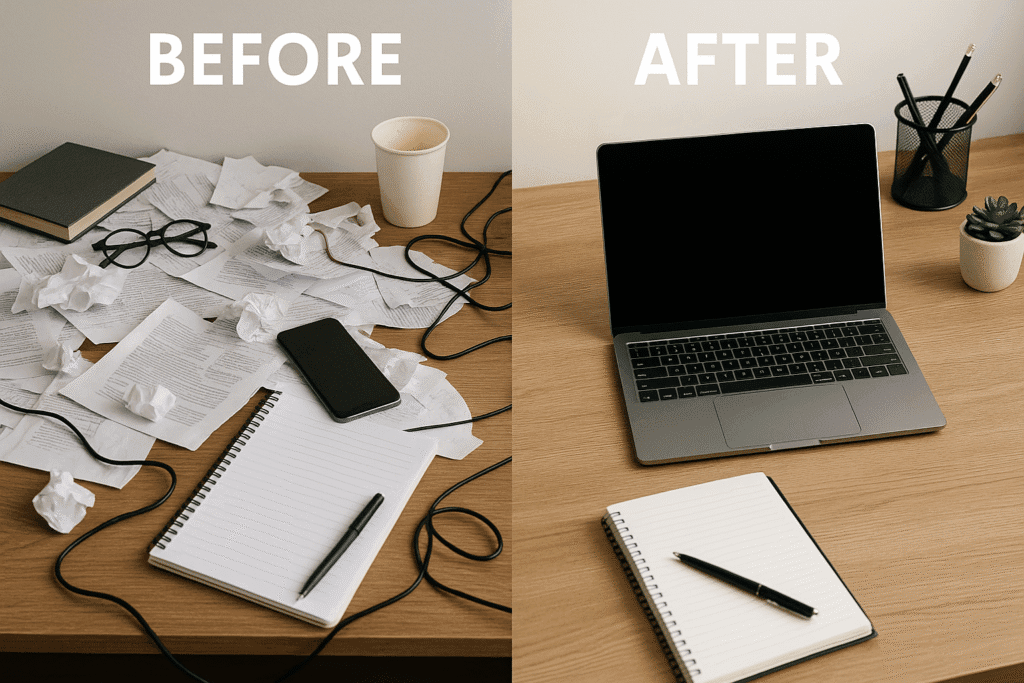
Next, consider your digital environment. Close unnecessary browser tabs, silence non-essential notifications, and put your phone in another room if possible. I learned this lesson the hard way when I realized I was unconsciously reaching for my phone every few minutes, even when it wasn’t making noise.
The Power of Intentional Planning
One of the biggest focus killers is not knowing what you should be working on. When you sit down without a clear plan, your brain defaults to whatever seems most interesting or urgent in the moment—which is rarely what’s most important.
Every evening, I spend five minutes writing down the three most important tasks for the next day. Not ten tasks, not a lengthy to-do list that would make Santa jealous—just three clear, specific objectives. This simple habit eliminates decision fatigue and gives your brain a clear target to aim for.
Master the Art of Concentration with These Proven Hacks
1. Embrace the Power of the Pomodoro Technique
If you’re finding it hard to maintain concentration for long periods, the Pomodoro Technique might be your productivity savior. This time management method, developed by Francesco Cirillo in the late 1980s, involves breaking your work into 25-minute intervals called “Pomodoros,” with a five-minute break between each session. After completing four Pomodoros, you take a longer break of 15-30 minutes.
Why does this work so well? Our brains are naturally wired for bursts of intense focus followed by periods of rest. According to neuroscience research, the 25-minute timeframe is short enough to maintain concentration without feeling overwhelming, yet long enough to make meaningful progress on important tasks.
How the Pomodoro Technique Works:
| Time Block | Activity | Purpose |
|---|---|---|
| 25 minutes | Focused work session | Deep concentration on single task |
| 5 minutes | Short break | Mental reset, physical movement |
| Repeat 4x | Work cycles | Build momentum |
| 15-30 minutes | Long break | Full mental recovery |
Here’s how I’ve adapted the technique for real-world family life: When I need to tackle something that requires deep concentration, I tell the kids I’m going into “focus mode” for 25 minutes. They know not to interrupt unless someone is bleeding or the house is on fire. During the five-minute breaks, I’m fully available for quick questions or hugs.
Grab a timer (your phone works fine), set it for 25 minutes, and dive into your most important task. No checking email, no “quick” social media scrolls, no sudden urges to reorganize your sock drawer. When the timer goes off, take a genuine break—stretch, grab some water, or step outside for fresh air.
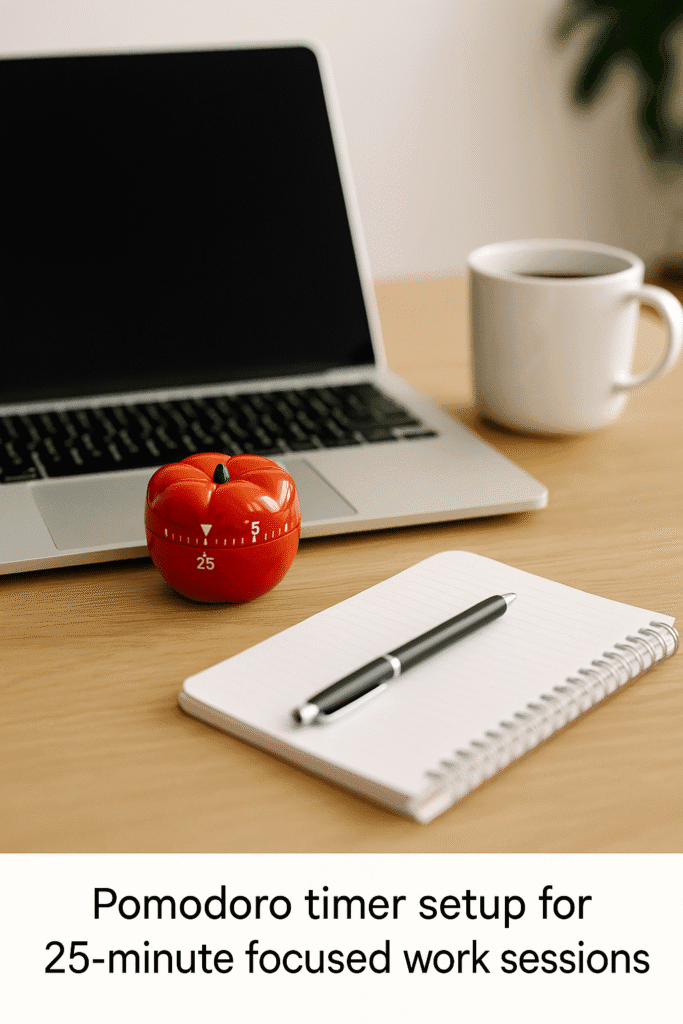
The beauty of this technique is that it makes large, overwhelming projects feel manageable. Instead of thinking “I need to write this entire report,” you think “I just need to focus for 25 minutes.” That psychological shift makes all the difference.
2. Create Your “Deep Work” Playlist
Music can be a powerful tool for maintaining concentration, but it needs to be the right kind of music. I discovered this during my Air Force days when we needed to stay alert during long, detailed tasks. The key is choosing background music that enhances your ability to concentrate without hijacking your attention.
For concentration work, instrumental music works best. Your brain won’t get caught up in processing lyrics, which compete with the verbal processing centers you need for most work tasks. According to research from Stanford University, music can improve cognitive performance when chosen strategically. I personally gravitate toward ambient electronic music, classical pieces, or lo-fi hip-hop beats. There’s something about the steady rhythm that helps my mind settle into a productive groove.

Best Music Genres for Focus:
- ✅ Ambient electronic
- ✅ Classical (especially Baroque)
- ✅ Lo-fi hip-hop beats
- ✅ Nature sounds
- ✅ White/brown noise
- ❌ Songs with lyrics (in your native language)
- ❌ High-energy rock or metal
- ❌ Anything that triggers strong emotions
Create a dedicated playlist that you use only for focused work. Over time, hearing these songs will trigger your brain to enter “work mode” automatically. It’s like Pavlov’s bell, but for productivity instead of hungry dogs.
Some people prefer complete silence, and that’s perfectly valid too. The goal is finding what works for your brain, not following someone else’s formula. Experiment with different approaches and pay attention to what helps you maintain concentration longest.
3. The Strategic “Bribery” Method
Let’s be honest about human psychology: we’re motivated by rewards. This isn’t a character flaw—it’s how our brains are designed. The key is using this natural tendency strategically rather than letting it work against you.
I use what I call “strategic bribery” to maintain motivation during challenging tasks. After completing a difficult Pomodoro session, I might enjoy a piece of dark chocolate, take a short walk around the block, or spend five minutes reading something interesting but unrelated to work.
The crucial element is making the reward proportional to the effort. Finishing a 25-minute focused session doesn’t earn you an hour-long Netflix binge, but it might merit a good cup of coffee or a few minutes checking personal messages.
Strategic Rewards Framework:
| Task Completed | Appropriate Reward | Time Limit |
|---|---|---|
| 1 Pomodoro (25 min) | Small snack, stretch, water | 5 minutes |
| 4 Pomodoros (2 hours) | Short walk, coffee break | 15-20 minutes |
| Major milestone | Special lunch, favorite show episode | 30-60 minutes |
| Full project completion | Evening off, hobby time, celebration | As needed |
For larger projects, I create milestone rewards. Completing a major section of work might earn a special lunch, an episode of a favorite show, or time for a hobby I enjoy. The anticipation of these rewards helps pull me through challenging moments when focus feels impossible.
One word of caution: avoid rewards that make it harder to return to work. Scrolling social media might seem like a harmless five-minute break, but research shows it can take up to 23 minutes to fully refocus after an interruption. Choose rewards that refresh you without derailing your momentum.
Advanced Strategies for Sustained Focus
4. The “Batch Processing” Revolution
One of the biggest focus killers is constantly switching between different types of tasks. Every time you shift from writing to answering emails to making phone calls, your brain needs time to adjust. According to research from the University of California, Irvine, this “switching cost” can waste hours of productive time without you even realizing it.
Batch processing involves grouping similar tasks together and handling them in dedicated blocks. Instead of checking email throughout the day, I designate specific times—usually mid-morning and late afternoon—for email management. This prevents the constant mental interruption of incoming messages while ensuring nothing important gets missed.
Sample Batching Schedule:
| Time | Task Batch | What Gets Done |
|---|---|---|
| 8:00-10:00 AM | Creative/Deep Work | Writing, strategy, complex problem-solving |
| 10:00-10:30 AM | Communications | Email, messages, quick responses |
| 10:30 AM-12:30 PM | Project Work | Implementation, focused tasks |
| 12:30-1:30 PM | Break/Lunch | True mental rest |
| 1:30-2:00 PM | Administrative | Filing, organizing, planning |
| 2:00-4:00 PM | Meetings/Calls | All scheduled back-to-back |
| 4:00-4:30 PM | Communications | Final email check, wrap-up |
The same principle applies to phone calls, administrative tasks, creative work, and even household management. On Sundays, I batch process meal planning for the week, reducing the daily decision fatigue about dinner. When I need to make several phone calls, I schedule them back-to-back rather than spreading them throughout the day.
This approach requires some initial planning, but the payoff in sustained concentration is enormous. Your brain can settle into a rhythm instead of constantly shifting gears, making it much easier to maintain focus.
5. Embrace the Power of Strategic Sticky Notes
Sticky notes might seem old-fashioned in our digital world, but they’re incredibly effective for maintaining focus when used strategically. The key is using them to support concentration rather than creating a rainbow of reminders that add to the visual clutter.

I use three types of sticky notes in my workspace:
Focus Anchors: A single note with my current priority task written clearly. When I feel my attention wandering, this note pulls me back to what matters most.
Motivation Boosters: Short, positive reminders about why the current task matters. “This report helps families make better decisions” is more motivating than “Finish report by Friday.”
Process Reminders: Simple prompts for staying on track, like “Break large tasks into smaller steps” or “Take a break every hour.”
The visual nature of sticky notes provides a gentle redirect for your attention without the digital distractions that come with phone or computer reminders. Plus, there’s something satisfying about physically removing a completed task note—it’s a small but meaningful sense of accomplishment.
6. Master the “Do Not Disturb” Mindset
Digital notifications are the arch-enemy of sustained concentration. That innocent-looking notification badge creates what researchers call “attention residue”—part of your mind stays focused on the notification even when you try to ignore it. Studies from The University of Texas at Austin show that even the presence of a smartphone reduces cognitive performance, even when it’s turned off.
Activating “Do Not Disturb” mode on your devices is essential, but the real power comes from developing a “Do Not Disturb” mindset. This means being intentional about when and how you allow interruptions.
Do Not Disturb Implementation:
- 📱 Phone: Face down, in another room, or in a drawer
- 💻 Computer: Close email, disable pop-ups, use focus mode
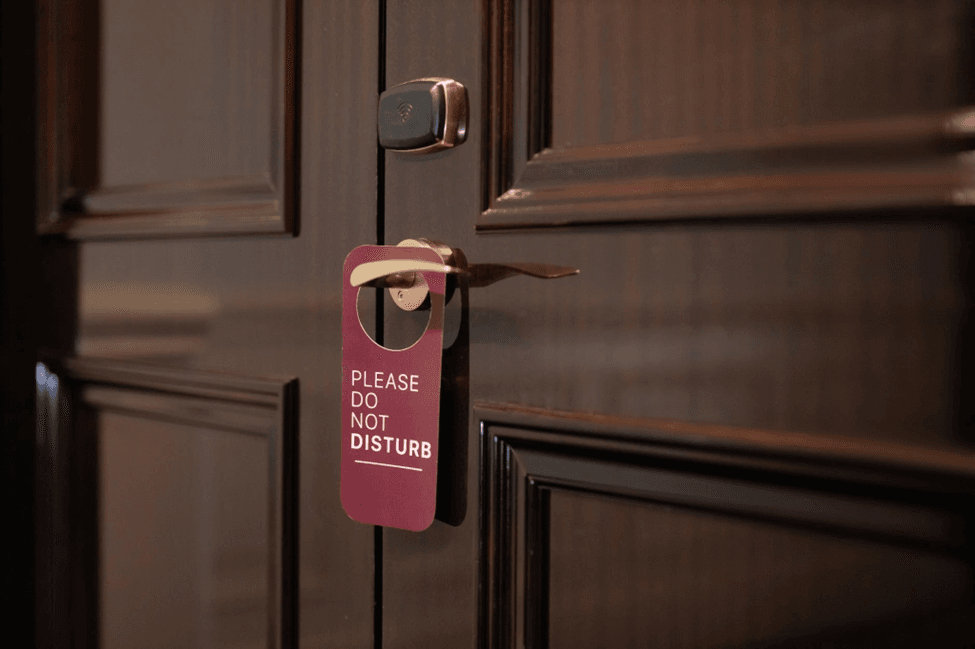
- 🚪 Physical space: Door closed, “focus time” sign visible
- 👨👩👧👦 Family: Clear emergency-only policy during focus blocks
- 💼 Work: Set status to “Busy” or “In Deep Work”
I’ve established clear boundaries with my family about work time. The kids know that when my office door is closed and my “focus time” sign is up, they should only interrupt for genuine emergencies. We’ve defined what constitutes an emergency (someone is hurt, something is broken or dangerous) versus what can wait 25 minutes (requests for snacks, help finding something, or settling minor disputes).
For work situations, this might mean letting colleagues know your focused work hours or setting expectations about response times for non-urgent communications. The goal isn’t to become antisocial—it’s to create protected time for your most important work.
7. The Two-Minute Rule for Mental Clarity
Distractions often come from small, nagging tasks that occupy mental space even when they’re not urgent. The Two-Minute Rule, popularized by productivity expert David Allen, is simple: if something takes less than two minutes to complete, do it immediately rather than adding it to your to-do list.
This prevents small tasks from accumulating into overwhelming mental clutter that makes concentration harder. Filing that document, sending a quick confirmation email, or putting something back where it belongs takes minimal time but provides significant mental relief.
However, use this rule strategically. If you’re in the middle of focused work time, jot down two-minute tasks to handle during your next break rather than interrupting your concentration. The goal is preventing mental accumulation, not creating new distractions.
Building Long-Term Focus Stamina
8. The Physical Foundation of Mental Concentration
Your ability to focus is directly connected to your physical health. After years of juggling family responsibilities while maintaining demanding work schedules, I’ve learned that physical wellness isn’t separate from mental performance—they’re inseparable.
The Focus Foundation Framework:
| Physical Factor | Impact on Focus | Recommended Action |
|---|---|---|
| Sleep | 7-9 hours needed for optimal prefrontal cortex function | Consistent sleep schedule, dark room, no screens 1 hour before bed |
| Nutrition | Stable blood sugar = steady attention | Protein-rich breakfast, avoid heavy carb lunches, regular meals |
| Exercise | 10-min walk = 2 hours improved focus | Daily movement, preferably morning |
| Hydration | 2% dehydration = measurable cognitive decline | Keep water visible, sip regularly |
Sleep: This is non-negotiable. When you’re sleep-deprived, your prefrontal cortex—the brain region responsible for executive function and focus—operates at severely reduced capacity. According to the National Sleep Foundation, most adults need 7-9 hours of quality sleep for optimal cognitive performance.
Nutrition: Your brain consumes about 20% of your daily calories, and what you eat directly affects your ability to concentrate. Stable blood sugar levels support sustained attention, while spikes and crashes create focus problems. I’ve found that eating protein-rich breakfasts and avoiding heavy, carb-loaded lunches helps maintain steady energy throughout the day.
Exercise: Regular physical activity improves concentration in both the short and long term. Even a 10-minute walk can boost focus for up to two hours afterward. The increased blood flow and endorphin release help your brain operate at peak efficiency.

Hydration: Mild dehydration—as little as 2% fluid loss—can impair cognitive function and make it harder to maintain concentration. According to research from the University of Connecticut, keep water nearby and sip regularly rather than waiting until you feel thirsty.
9. The Practice of Single-Tasking for Better Focus
Despite what some people claim, multitasking is a myth when it comes to effective productivity. What we call multitasking is actually rapid task-switching, and it’s incredibly inefficient. Research from Stanford University shows that people who multitask take up to 25% longer to complete tasks and make significantly more errors.
The Multitasking Myth: Real Cost Analysis
| Scenario | Time to Complete | Error Rate | Mental Fatigue |
|---|---|---|---|
| Single-tasking (one task at a time) | 60 minutes | 5% errors | Low |
| Task-switching (alternating tasks) | 75 minutes (+25%) | 15% errors | High |
| “Multitasking” (attempting simultaneous) | 90 minutes (+50%) | 25% errors | Severe |
Single-tasking means committing fully to one activity at a time. When you’re writing, you’re only writing. When you’re in a meeting, you’re only attending to the meeting. When you’re playing with your kids, you’re only playing with your kids.
This approach feels counterintuitive because we’ve been conditioned to believe that doing multiple things simultaneously makes us more productive. In reality, it makes everything take longer and reduces the quality of our work.
Start practicing single-tasking with small commitments. During your next phone call, resist the urge to check email simultaneously. While eating lunch, actually focus on your meal instead of scrolling through your phone. These small moments of intentional attention train your brain for longer periods of sustained focus.
Special Considerations for Parents
10. Teaching Children to Respect Focus Time
Many parents struggle with maintaining concentration because children haven’t been taught about focus time. Kids don’t automatically understand that interrupting someone working isn’t always okay—they need explicit teaching and consistent reinforcement.
Establishing “focus time” as a family concept helps tremendously. During designated periods, everyone works on something that requires concentration—homework, reading, creative projects, or even focused play. This removes the isolation often associated with individual work time and makes staying focused feel collaborative rather than punitive.
For younger children, start with very short focus periods—maybe five or ten minutes—and gradually increase duration as their attention span develops. The key is making it positive and achievable rather than frustrating.
11. Managing Family Distractions
Large families create unique focus challenges that require creative solutions. In households with multiple children, chaos can erupt in approximately 3.2 seconds. I’ve learned to work with this reality rather than fighting it.
Designated Quiet Hours: Many families establish times when the household operates at reduced volume. This doesn’t mean complete silence—that’s impossible with small children—but everyone makes an effort to be more considerate about noise levels.
Shared Responsibility: Older kids can help manage younger siblings during parents’ focused work time. This teaches responsibility while creating protected space for concentrated effort.
Physical Boundaries: Sometimes you need to physically separate yourself from family distractions to maintain concentration. Having a small office space with a door that signals when you’re in focused work mode helps. When that’s not possible, even working at the kitchen table during school hours can provide needed quiet time.
Modeling Healthy Focus Habits
Your children are always watching and learning from your behavior. When they see you constantly checking your phone, multitasking during conversations, or expressing frustration about distractions, they internalize these patterns.
Conversely, when they observe you practicing intentional focus, taking breaks when needed, and maintaining boundaries around attention, they develop healthier relationships with technology and productivity. This is one of the most valuable gifts you can give them for their future success.
Advanced Techniques for Peak Performance
12. The Art of Deep Work
Cal Newport, in his book “Deep Work,” defines this as “professional activities performed in a state of distraction-free concentration that push your cognitive capabilities to their limit.” This type of focused effort produces the highest-quality work and greatest sense of professional satisfaction—something every parent juggling multiple responsibilities can appreciate.
Deep work requires more than just eliminating distractions—it demands actively cultivating the ability to concentrate intensely for extended periods. This might mean scheduling regular periods for deep work, creating rituals that support sustained concentration, and gradually increasing your tolerance for focused effort.
For most people, deep work sessions should start at 30-60 minutes and gradually increase. Even highly focused individuals rarely sustain deep work for more than 3-4 hours per day. Quality trumps quantity when it comes to concentrated effort.
Leveraging Your Natural Rhythms for Optimal Focus
Everyone has times of day when focus comes more easily and periods when concentration feels nearly impossible. Rather than fighting your natural rhythms, work with them strategically.
I’m naturally most alert in the early morning hours, so I protect this time for my most challenging cognitive work. By mid-afternoon, my concentration wanes, making it a good time for routine tasks, email management, or physical activities. Research from Sleep Breath Journal confirms that our cognitive abilities fluctuate predictably throughout the day.
Daily Energy Patterns & Optimal Task Matching:
| Time of Day | Typical Energy Level | Best Tasks |
|---|---|---|
| Early Morning (6-9 AM) | Peak alertness | Creative work, strategic thinking, complex problem-solving |
| Mid-Morning (9 AM-12 PM) | High energy | Important meetings, detailed work, learning new skills |
| Early Afternoon (12-2 PM) | Post-lunch dip | Routine tasks, emails, light administrative work |
| Mid-Afternoon (2-4 PM) | Recovery period | Collaborative work, phone calls, physical tasks |
| Late Afternoon (4-6 PM) | Second wind | Planning, organizing, wrapping up projects |
| Evening (6 PM+) | Declining focus | Family time, relaxation, prep for tomorrow |
Track your energy and focus levels throughout the day for a week or two. Note when you feel most alert and when your attention tends to drift. Then restructure your schedule to align demanding cognitive work with your peak focus periods.

The Power of Strategic Breaks for Sustained Focus
Taking breaks isn’t a sign of weakness—it’s a requirement for sustained performance. Your brain needs regular rest to maintain focus and prevent burnout. According to neuroscience research from DeskTime, the key is taking the right kind of breaks at the right intervals.
Micro-breaks: Every 25-30 minutes, take a 2-3 minute break to stand, stretch, or look out a window. This prevents physical strain and mental fatigue from accumulating.
Movement breaks: Every 90 minutes, take a 5-10 minute break that involves physical movement. Walk around, do some stretches, or step outside for fresh air. Physical movement increases blood flow to the brain and helps reset your attention.
Nature breaks: When possible, spend break time in natural settings or at least looking at natural scenery. Research from the University of Michigan shows that even brief exposure to nature can restore mental energy and improve subsequent concentration.
Troubleshooting Common Focus Problems
Focus During Major Life Changes
Life transitions—whether positive or negative—create unique challenges for maintaining concentration. During periods of significant change, such as career transitions, adjusting to new parenthood, and various family changes, expecting your usual focus abilities sets you up for frustration.
During these periods, lower your expectations temporarily while maintaining your focus practices. You might need shorter work sessions, more frequent breaks, or different strategies altogether. The key is adapting your approach rather than abandoning it entirely.
Be patient with yourself during these times. Your brain is processing significant changes, which naturally consumes mental resources that would otherwise be available for work tasks. This is temporary—as you adjust to new circumstances, your concentration abilities will return.
Maintaining Focus as You Age
As we get older, certain aspects of cognitive function naturally change, but the ability to focus can actually improve with age and experience. According to research from the University of Toronto, older adults often show better sustained attention and less susceptibility to distractions than younger people, partly due to increased life experience and emotional regulation.
However, you might need to adjust your strategies over time. What worked in your twenties might need modification in your forties or sixties. Stay flexible and experiment with new approaches as your needs change.
The fundamental principles—good sleep, regular exercise, proper nutrition, and stress management—become even more important with age for maintaining concentration. Investing in these foundational elements pays dividends for cognitive performance throughout your life.
Final Thoughts: Making Focus Your Superpower
After years of refining these strategies while managing a busy family and demanding career, I can confidently say that the ability to focus is one of the most valuable skills you can develop. It affects every area of your life—your work quality, family relationships, personal growth, and overall sense of accomplishment.
The techniques I’ve shared aren’t just theoretical concepts—they’re battle-tested strategies that work in real-world conditions with real-world distractions. Some will resonate with you immediately, while others might require adaptation to fit your unique situation.
Start with one or two techniques rather than trying to implement everything at once. Master those approaches, then gradually add additional strategies. Building focus is like building physical strength—it requires consistent practice over time, but the results are worth the effort.
Remember that setbacks are normal and temporary. Everyone has days when concentration feels impossible, and that’s perfectly human. The goal isn’t perfection—it’s progress. Each time you choose to redirect your attention back to what matters most, you’re strengthening your focus muscles for future challenges.
Whether you’re tackling a major work project, managing family responsibilities, or pursuing personal goals, these strategies will serve you well. With practice and patience, you can transform your ability to concentrate and achieve what matters most.
Your to-do list doesn’t stand a chance when you’ve mastered the art of focus!