Why Parents Feel Behind (Even When Doing Everything Right)
1. Why Parents Feel Behind: The Invisible Finish Line 😩
Let me paint a scene that’s probably uncomfortably familiar.
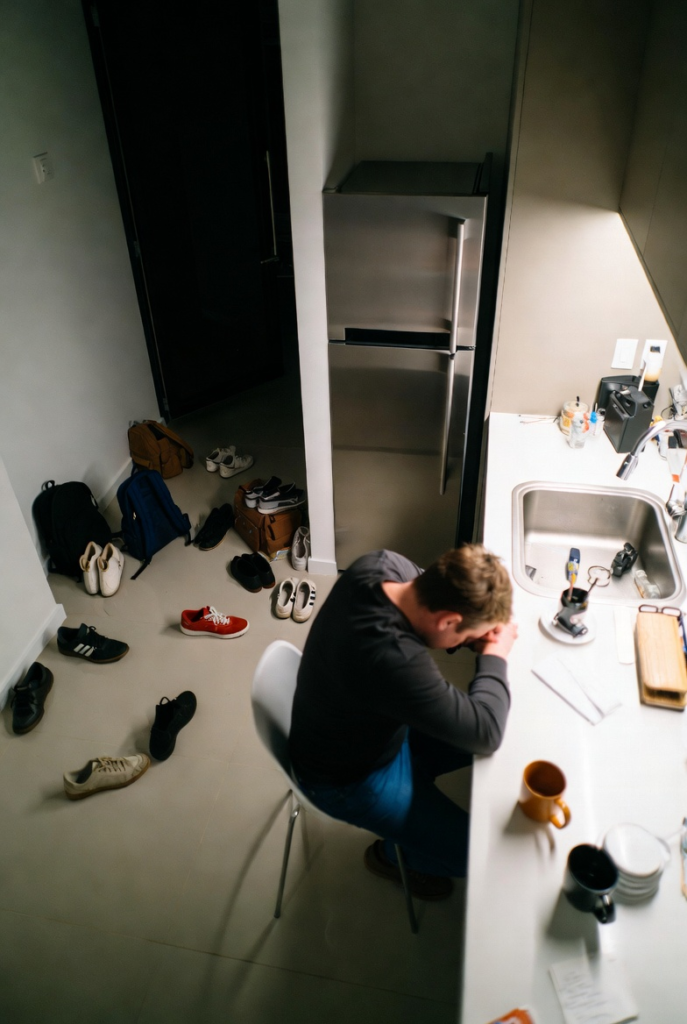
It’s the end of the day. Dinner is done. The kids are fed. Homework is turned in or at least turned toward the backpack, which counts in most households. Backpacks are lined up by the door like they know what’s coming in the morning. Shoes are scattered in a way that suggests an explosion happened sometime around 3:47 p.m.
The house isn’t clean, but it’s fine. It’s “we live here” clean.
You finally sit down. Or maybe you lean against the counter because sitting feels like a commitment you’re not emotionally ready to make yet.
And that’s when it hits.
That feeling that you’re still behind.
Not overwhelmed. Not panicked. Just this low, persistent pressure humming in the background like a refrigerator you can’t quite tune out. The feeling that something is unfinished. Or forgotten. Or waiting for you. Probably all three.
Your brain immediately starts scrolling, whether you asked it to or not:
- Tomorrow’s schedule
- That school email you didn’t open yet
- The permission slip you think you signed
- The message you meant to reply to earlier
- The thing you remembered while brushing your teeth
- The thing you just remembered while reading this
Nothing is urgent. No one is crying. No alarms are going off. By any reasonable standard, today was a success.
So why won’t your body relax?
That’s the part that messes with parents.
Because from the outside, it looks like you’re doing great. You showed up. You handled things. You were responsible. You didn’t drop any major balls. If parenting had a scorecard, you’d be comfortably in the “winning” column.
And yet, you don’t feel caught up. You feel like you’re always one step behind an invisible deadline.
Most parents assume this means they’re doing something wrong.
If I were more organized…
If I had a better system…
If I could just get ahead for once…
So we try harder. We optimize. We add tools. We rearrange routines. We promise ourselves that next week will be different.
But here’s the uncomfortable thing I learned after years of telling myself I just needed to “get it together”:
That feeling doesn’t go away when you try harder. In a lot of cases, it actually gets worse.
Because the problem isn’t effort. It’s the system you’re operating inside.
Modern parenting doesn’t collapse in obvious ways. It doesn’t fail loudly. It stretches. It expands. It quietly fills every open space with one more task, one more message, one more decision that technically matters and therefore can’t be ignored.
You’re not lazy. You’re not failing. You’re not missing some secret trick everyone else figured out.
You’re running inside a system with no finish line. 🏁
And humans are not built for that.
2. The Illusion of Progress in Modern Parenting 📱
Somewhere along the way, productivity stopped feeling like accomplishment.
Parents get an astonishing amount done every single day. Meals get made. Schedules get managed. Drop-offs happen. Pick-ups happen. Homework gets supervised. Emails get answered. Problems get solved before they turn into bigger problems.
You are moving constantly.
And yet, at the end of the day, it doesn’t feel like you finished anything.
Part of this is generational. Parenting used to be more contained. Tasks had edges. There were clearer starts and stops. School communication came home once a week in a crumpled folder. When work ended, it mostly stayed ended. If something didn’t get done, it often waited until tomorrow.
Now parenting is continuous.
School didn’t replace weekly notes with one clean system. It gave us email and apps and portals and notifications. Activities didn’t replace free time. They layered logistics on top of it. Communication didn’t get simpler. It got louder.
You’re not just doing tasks anymore. You’re monitoring systems.
And monitoring never ends.
Here’s the sneaky part: visibility feels like control. When everything is tracked, logged, synced, and surfaced, it looks like progress. But your brain doesn’t register “done.” It registers “still active.”
Even when you complete something, it doesn’t disappear. It stays visible. It stays open. It stays mentally “on.”
That’s why productivity doesn’t feel satisfying anymore. It creates motion without closure.
And then there’s comparison. Because everyone else looks fine.
You don’t see the internal spiral they have when they finally sit down at night. You see the soccer photos. The family dinner. The well-timed post that suggests competence and calm.
📌 Quick reality check: Seeing other parents cope doesn’t mean they’re coping well.
A lot of parents are quietly burning out while still functioning. They’re organized. Capable. Reliable. Nothing looks broken, so they assume the strain is just part of the deal.
This is the kind of burnout that hides behind competence. The kind where you don’t fall apart, you just get tired in a way that sleep doesn’t fix. You keep going because stopping feels irresponsible.
That pattern shows up over and over in conversations about parental burnout, especially the quiet kind where parents don’t feel “burned out enough” to justify slowing down:
This kind of burnout doesn’t look dramatic. It looks like:
- Being tired even when you sleep 😴
- Snapping over small things 😤
- Feeling guilty for resting 😔
- Feeling behind no matter how much you do
The lie we tell ourselves is that if we just do a little more, it’ll finally feel better.
But productivity inside a system with no end state doesn’t create relief.
It just feeds the machine. ⚙️

3. Why Optimization Makes the Feeling Worse 📅
When parents start feeling behind, we don’t usually slow down.
We optimize.
We buy the planner. We download the app. We color-code the calendar. We sync everything to everything else and feel very accomplished about it.
Ask me how I know.
There’s a moment when optimization feels amazing. For about three days. You feel in control. You feel organized. You feel like this is finally the system that’s going to fix it.
And then something strange happens.
You’re still tired. You still feel behind. And now you’re managing the system that was supposed to help you.
Here’s the part nobody warns parents about: optimization doesn’t reduce responsibility. It makes responsibility permanent.
Before the app, you forgot some things. Now you don’t forget them. You see them. All the time. Every reminder, every notification, every color-coded box is your brain being tapped on the shoulder saying, “Hey. Remember this exists.”
A new app doesn’t remove decisions. It adds: setup, maintenance, notifications, one more place your attention has to check.
A better planner doesn’t shrink your load. It just keeps your entire life visible at all times, like a dashboard you can never turn off.
That’s why being “on top of things” can feel exhausting.
The system works. Technically. But you’re never off duty.
This is where a lot of parents get confused. Because they’re doing everything right. They’re organized. They’re proactive. They’re not dropping balls. So why does it still feel like too much?
Because most systems are designed to increase throughput, not protect capacity.
There’s a huge difference between systems that help you move faster and family organization systems that reduce mental load. One sharpens the pressure. The other actually lightens what your brain has to carry.
That difference is spelled out clearly here:
Most parents accidentally build systems that make them more efficient at doing too much.
📊 Optimization vs Relief
| Optimization Focus | Relief Focus |
|---|---|
| Faster execution | Fewer responsibilities |
| Better tools | Clear limits |
| More efficiency | Less ownership |
| Full calendars | Contained days |
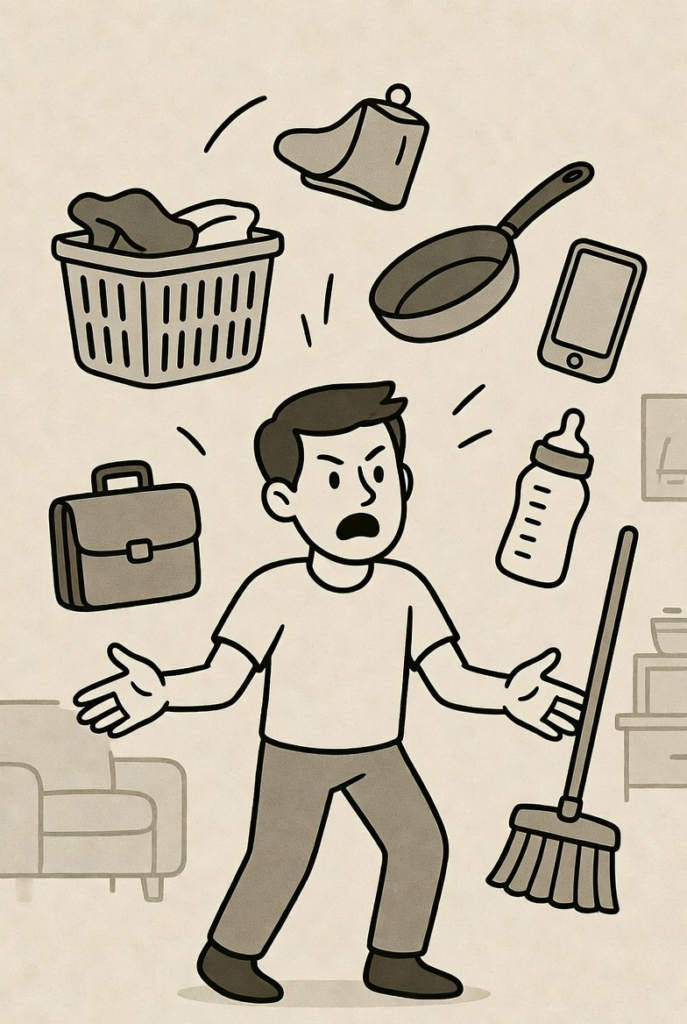
Optimization culture assumes speed creates freedom. In parenting, speed usually creates expectation. When you’re capable, more gets handed to you. More coordination. More communication. More “Can you just…”
The system quietly rewards competence with additional responsibility.
So if you’re optimized and exhausted, that doesn’t mean you failed.
It means the system is doing exactly what it was designed to do.
4. The Missing Concept: Completion Debt 🔄
This is the part most parents feel but can’t quite name.
I call it completion debt.
Completion debt is what happens when tasks never truly end. They recycle instead of conclude. They stay mentally open even after you’ve handled them for today.
Laundry isn’t done. It resets. Meals aren’t finished. They recur. School doesn’t end. It escalates.
Even the emotional stuff stays open:
- Are the kids okay socially?
- Did that conversation land right?
- What’s coming next week?
- What did I forget?
Your brain doesn’t care that nothing is urgent. It cares that nothing is closed.
This isn’t a personality flaw. It’s how brains work.
When something doesn’t have a clear endpoint, your nervous system keeps it active in the background. It’s like having twenty browser tabs open in your head at all times, each one quietly draining energy.
Research on decision-making shows that constant low-level decisions deplete cognitive capacity even when nothing is “wrong.” The American Psychological Association explains how repeated decisions deplete self-control and cognitive resources over time:
In normal language: your brain is tired because it never gets to shut anything down.
📊 Visible Tasks vs Invisible Load
| Visible Tasks | Invisible Load |
|---|---|
| Laundry | Tracking clothing needs |
| Meals | Planning, remembering preferences |
| School events | Monitoring apps and deadlines |
| Activities | Coordination, transport, follow-up |
That invisible work never clocks out. It doesn’t stop because you’re resting. It stays active because nothing ever says, “We’re done here.”
This is why productivity doesn’t feel satisfying anymore. You’re not just doing work. You’re carrying unresolved work.
You’re paying interest on completion debt all day long.
Here’s what makes this especially brutal for modern parents: previous generations had more natural stopping points. Fewer inputs. Slower information. Narrower expectations. When something was done, it was often actually done.
Now everything rolls forward. Today’s tasks bleed into tomorrow’s planning. Today’s decisions generate tomorrow’s follow-ups. The work never closes, it just shifts shape.

And a nervous system that never hears “done” never fully relaxes.
That’s why you can sit down at night and still feel keyed up. That’s why rest doesn’t land. That’s why the feeling of being behind never quite leaves.
It’s not because you’re failing.
It’s because you’re living inside an open-loop system that was never designed with human limits in mind.
5. Why Rest Doesn’t Work When the System Is Broken 🛋️
This is usually where the advice gets well-meaning and completely useless.
“Just rest more.” “Take a weekend.” “Book a vacation.”
If rest alone fixed this, parents would be the most relaxed people on the planet.
Here’s the problem: you can’t rest your way out of a system that’s still actively draining you.
Weekends don’t feel restful when Monday is already yelling at you from across the room. Vacations don’t fix exhaustion when your brain is quietly tracking everything waiting at home. Even sleep doesn’t always help when your mind wakes up before your body does.
Ask any parent who’s ever come back from vacation and immediately needed… another vacation.
This isn’t because you’re bad at resting. It’s because the system never powered down.
There’s a concept called invisible labor that explains this perfectly. Harvard Gazette describes how invisible work (planning, anticipating needs, emotional monitoring) in households creates ongoing mental load that leads to exhaustion even when physically resting:
Your body can be on the couch while your brain is still running the household.
That’s why parents often feel guilty after “rest.” You took time off and you’re still tired, so you assume you did it wrong. In reality, the workload never shut off long enough for recovery to land.
Rest works after reduction. Without reduction, rest just becomes another thing you’re failing to do correctly.
And parents already have enough of those.
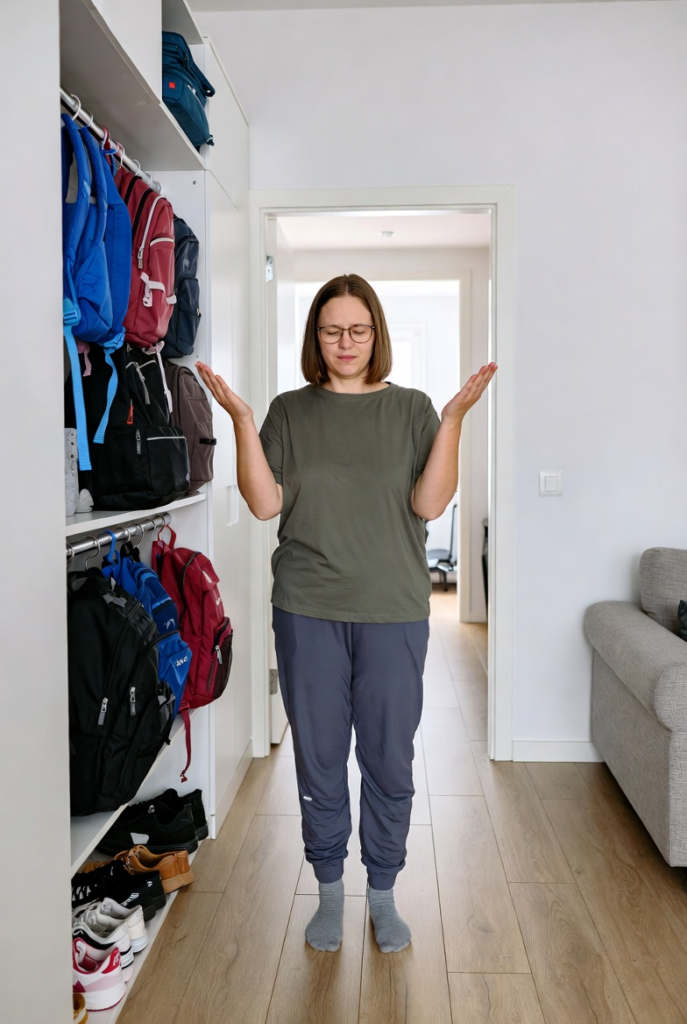
6. What Actually Creates Relief (Without Overhauling Your Life) 🌿
Here’s the good news: relief doesn’t come from doing everything perfectly.
It comes from doing less on purpose.
Parents who feel steadier aren’t superhuman. They’ve quietly reduced how much their brain is responsible for carrying.
The first lever is decision volume.
Every decision costs energy. Not just big ones. Tiny ones too. Multiply that by a few hundred per day and you start to see the problem.
Relief often starts with boring, unglamorous defaults:
- The same breakfasts on school days
- Fixed meal rotations
- Hard limits on activities
- Pre-decided “no” categories
Not because they’re efficient. Because they remove decisions from circulation.
The second lever is externalizing memory.
If your brain is the storage unit for everything, it never rests. Systems that actually help move responsibility out of your head, not just onto another app.
This is why family routines that actually work feel different from rigid schedules:
Good routines don’t control you. They contain the chaos so your brain doesn’t have to.
📊 Load Reduction vs Time Management
| Strategy | Reduces Load? | Sustainable? |
|---|---|---|
| Better planner | ❌ | ❌ |
| More motivation | ❌ | ❌ |
| Defined “enough” | ✅ | ✅ |
| Shared ownership | ✅ | ✅ |
| Artificial finish lines | ✅ | ✅ |

Another big shift is shrinking active responsibility.
This means asking questions most parents never give themselves permission to ask:
- What actually must happen?
- What can slide without real consequences?
- What can stop entirely?
If that makes you uncomfortable, that’s normal. Parents are trained to absorb responsibility, not evaluate it.
This mindset lines up closely with practical overwhelmed parent survival strategies like the ones outlined here:
Parents who feel less behind aren’t doing everything.
They’re doing what fits inside a human nervous system.
7. The New Definition of “Enough” ✅
This is the reframe that changes everything.
Enough isn’t an ideal. It’s a functional threshold.
Enough means the system works without resentment. Enough means tomorrow doesn’t feel heavier than today. Enough means you can reset without collapse.
This is uncomfortable, because it gives you permission to stop optimizing. To let some things stay imperfect. To stop chasing a standard that keeps moving every time you get close.
Enough isn’t quitting. It’s choosing sustainability over appearance.
When “enough” is explicit, guilt loses its grip. You stop measuring yourself against an invisible scoreboard and start measuring against capacity.
Parents don’t need higher expectations. They need clearer ones.
And permission to honor them.

8. Closing: Why Parents Feel Behind – You’re Carrying Too Much ❤️
That feeling of being behind isn’t a verdict.
It’s a signal.
It’s your nervous system telling you the workload never resolves. That responsibility keeps expanding without limits. That the system expects infinite responsiveness from a finite human.
You don’t feel behind because you’re failing.
You feel behind because the system was never designed to let parents feel done.
Relief doesn’t come from catching up.
It comes from stepping off a race that never had a finish line in the first place.
And realizing that the problem was never you.
FAQ: Why Parents Feel Behind Even When They’re Doing Everything Right
1. Why do I feel behind even when the day went well?
You’re not failing. Modern parenting runs on an open-loop system with no true finish line—tasks recycle, decisions never fully close, and invisible mental load stays active. Your nervous system registers “still ongoing” instead of “done.”
2. Is this just me being disorganized?
No. It’s not about personal effort or organization. The feeling comes from a system that continuously adds tasks, notifications, and responsibility without natural stopping points.
3. Why does getting more organized sometimes make me feel worse?
Optimization tools (apps, planners, color-coding) make everything more visible and permanent. You stop forgetting—but now you’re constantly reminded and managing the system itself. It increases throughput, not relief.
4. What is “completion debt”?
Completion debt is the mental carry-over when tasks don’t truly end. Laundry resets, meals recur, school escalates, emotional check-ins linger. Your brain keeps open loops active, quietly draining energy even when nothing is urgent.
5. Why doesn’t rest or a vacation fix the exhaustion?
Rest only works after you reduce the load. If the system is still running (tracking, anticipating, planning), your brain never fully powers down. You return from vacation needing another one because the invisible labor never stopped.
6. How do I actually feel less behind without changing everything?
Reduce decision volume (same breakfasts, meal rotations, hard activity limits), externalize memory (get it out of your head), and shrink responsibility (ask: what must happen? what can slide?). Create artificial finish lines and define “enough.”
7. What does “enough” really mean for parents?
Enough is a functional threshold: the family runs without resentment, tomorrow doesn’t feel heavier, and you can reset without collapse. It’s sustainability, not perfection.
8. Am I burned out if I’m still functioning?
Yes—quiet burnout hides behind competence. Signs include being tired even after sleep, snapping over small things, guilt when resting, and feeling behind no matter how much you do.